Agentic AI
A deep dive into Agentic AI for the enterprise - from what it means and how it differs from Generative AI, to real-world use and governance.

What Is Agentic AI? An Enterprise Guide for Executives
Agentic AI is AI that can plan, decide, and carry out multi-step work on your behalf. An enterprise guide: what it means, the traits of an AI agent, how it differs from Generative AI, use cases, and how to start safely.

How Agentic AI Differs from Generative AI
Compare Agentic AI with Generative AI - their goals, how they work, and the role of people.

5 Use Cases of Agentic AI in the Enterprise
Five real-world Agentic AI examples, from customer service to IT teams.

AI Agent Governance: Governing AI Agents Safely
Five principles for governing AI agents - from least-privilege permissions to guardrails and PDPA.

An Agentic AI Adoption Roadmap for the Enterprise
A four-phase plan: assess readiness, pilot with human-in-the-loop, build governance, then scale and measure ROI.

The ROI of Agentic AI: Measuring the Value of AI Agents
A practical framework - time, cost, quality, and risk - plus hidden costs and baselines before you invest.

Claude Cowork: Agentic AI for Knowledge Work
A desktop AI agent that connects to your files and apps to finish multi-step knowledge work, no coding needed.

Claude Code for the Enterprise: Agentic Coding
Agentic coding in the terminal that reads your codebase, edits across files, and runs tests, with real enterprise results.
AI Transformation for the Enterprise
Strategy, getting started, governance, and measuring AI adoption across your organization.

What Is AI Transformation, and Why Organizations Must Start Now
Understand AI Transformation for the enterprise - what it means, how it differs from simply buying AI tools, the four pillars you need, and why to start today.

5 Steps to Successfully Adopt AI in Your Organization
A practical 5-step guide to adopting AI - from finding a use case and running a PoC to preparing data and teams, then scaling and measuring results.

AI Governance and Data Security: What Enterprises Must Know Before Using AI
The main risks of using AI in the enterprise, how they connect to PDPA, and the governance framework you should have in place before going live.

How to Measure the ROI of AI Projects
How to measure AI project ROI - the types of value AI creates, the metrics to use, common pitfalls, and a Business-First mindset.

Claude Code for Business: You Don't Need to Code
Anthropic's research shows non-developers get results close to engineers, plus 6 use cases to start with

Claude Cowork for Marketing Teams: AI That Runs the Work
Why marketing benefits fastest, six use cases, and real metrics from Anthropic's own teams

Generative AI for Marketing: Content, Ads & Campaigns
How Generative AI helps marketing - content, ad creative, email, SEO, and insight, with workflow and how to measure ROI.

Generative AI for HR: Using AI in People Operations
Six use cases from drafting JDs to survey summaries, plus bias and PDPA cautions and what Anthropic's own team does
Prompt Engineering for Business: A 5-Part Framework
Write prompts that get real results with a 5-part framework - Role, Task, Context, Format, Tone - with examples by department.
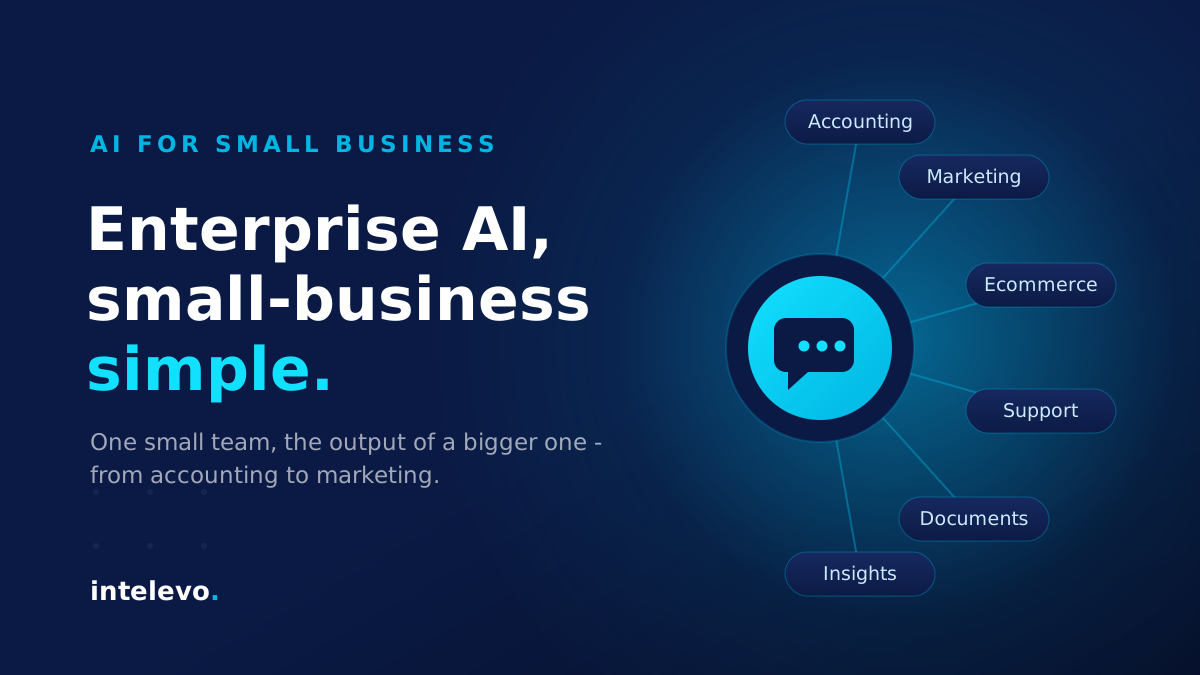
ChatGPT for Small Business: OpenAI's New SME Program
What OpenAI's ChatGPT for small business program includes, what it means for Thai SMEs, and 6 ways to start on your own

ChatGPT vs Claude for Business: Which to Use
A practical comparison of ChatGPT and Claude for the enterprise - each tool's strengths, choosing by task, and using them together.

What Is RAG? Making AI Answer from Your Data
RAG lets AI answer from your real enterprise data and reduces hallucination - how it works, use cases, and how to start.

AI for Sustainability: Driving Enterprise ESG
How AI supports enterprise sustainability and ESG - reporting, energy, and using AI responsibly.

How to Choose an AI Consulting Partner
Key criteria, questions to ask, red flags to watch for, and in-house vs outsourced.

How to Run Effective In-house AI Training
What to prepare, how to design a job-relevant curriculum, follow-up, and 5 success factors.